

Introduction
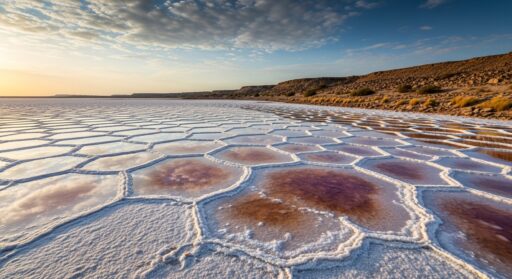
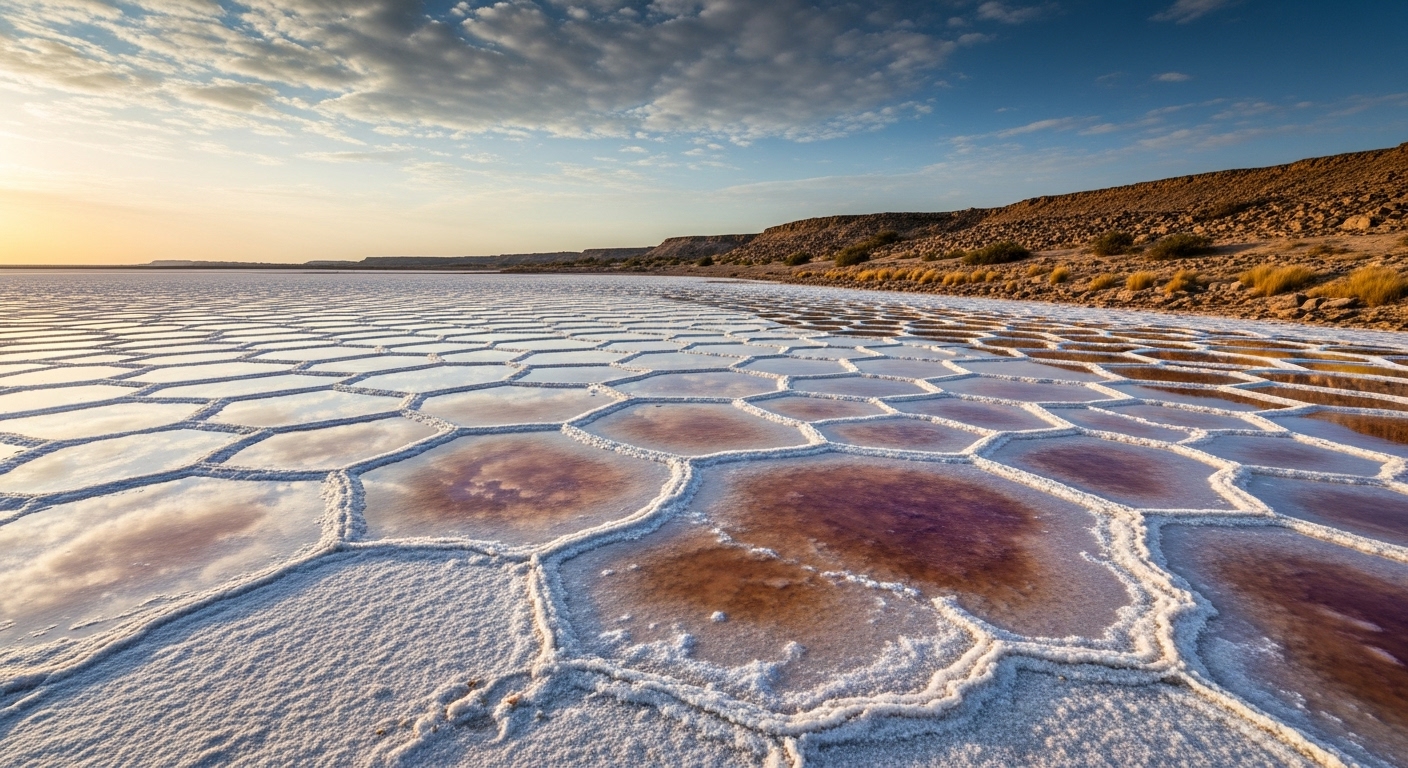
At the boundary where the desert meets the sea along the UAE’s coastline lies a strange and seemingly barren landscape: the sabkha. These extensive, salt-encrusted flats are one of the most distinctive and geologically significant features of the region’s geography. To the untrained eye, they may appear as empty wastelands, but to geologists and ecologists, they are dynamic, complex environments that tell a story of evaporation, sedimentation, and the subtle interplay between land and sea. The sabkha is a critical piece of the UAE’s natural heritage and a key to understanding its past.
The Formation of a Sabkha: A Recipe of Sand, Sea, and Sun
A sabkha forms in arid coastal regions through a precise set of conditions. The process begins when sea water, driven by onshore winds or high tides, floods low-lying areas behind the beach. Under the intense heat of the Arabian sun, this water evaporates rapidly. As it evaporates, the dissolved salts in the water begin to precipitate out, forming crusts of gypsum, anhydrite, and halite (common table salt) within the underlying sand and silt. Over time, this cycle of flooding and evaporation builds up a thick layer of evaporite minerals, creating the hard, cracked, and salt-rich surface characteristic of the sabkha.
The Coastal Sabkha vs. The Continental Sabkha
There are two primary types of sabkha in the UAE. The coastal sabkha, like the vast plains adjacent to Abu Dhabi island, is directly influenced by the sea. It is a active environment where the process of evaporation and salt crust formation is ongoing. Inland, one can find continental sabkhas. These form in low-lying desert depressions where groundwater, rich in dissolved salts from the surrounding rocks, rises to the surface through capillary action and evaporates, leaving behind salt pans. Both types create a hyper-saline environment that is inhospitable to most forms of life.
A Geological Time Capsule and Modern Analog
The sabkhas of the UAE are of immense global importance to geologists. They are considered a modern analog for the environments in which many of the world’s largest oil and gas reservoirs were formed millions of years ago. The processes happening today in the Abu Dhabi sabkha—the trapping of organic material and the formation of impermeable salt layers that can cap hydrocarbon reservoirs—are identical to those that created the conditions for the UAE’s own oil wealth deep underground. Studying the sabkha is like looking back in time at the birth of the region’s most valuable resource.
A Fragile Ecosystem and Modern Pressures
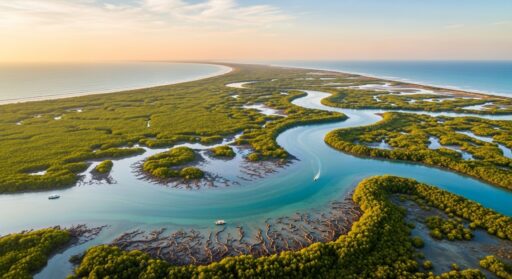
While seemingly lifeless, sabkhas support specialized, hardy life forms. Certain species of salt-tolerant plants (halophytes), like samphire, and microorganisms can survive the extreme salinity. The sabkha also serves as a feeding ground for migratory birds. However, this fragile environment faces significant pressure from urban and industrial expansion. Coastal development, land reclamation, and the construction of causeways can disrupt the delicate hydrological balance that sustains the sabkha, leading to erosion or altered salt deposition patterns.
Conclusion: The Silent, Salty Heart of the Coast
The sabkha is a landscape of subtlety and scientific wonder. It is a testament to the power of the sun and the sea, a living laboratory that helps us understand the planet’s geological history, and a unique, if harsh, ecosystem. Its preservation is crucial, not only for scientific study but as part of the UAE’s natural character. The sabkha reminds us that beauty and significance are not always found in lush greenery or dramatic mountains, but can also exist in the vast, silent, and salt-crusted plains where the desert patiently reclaims the sea.