
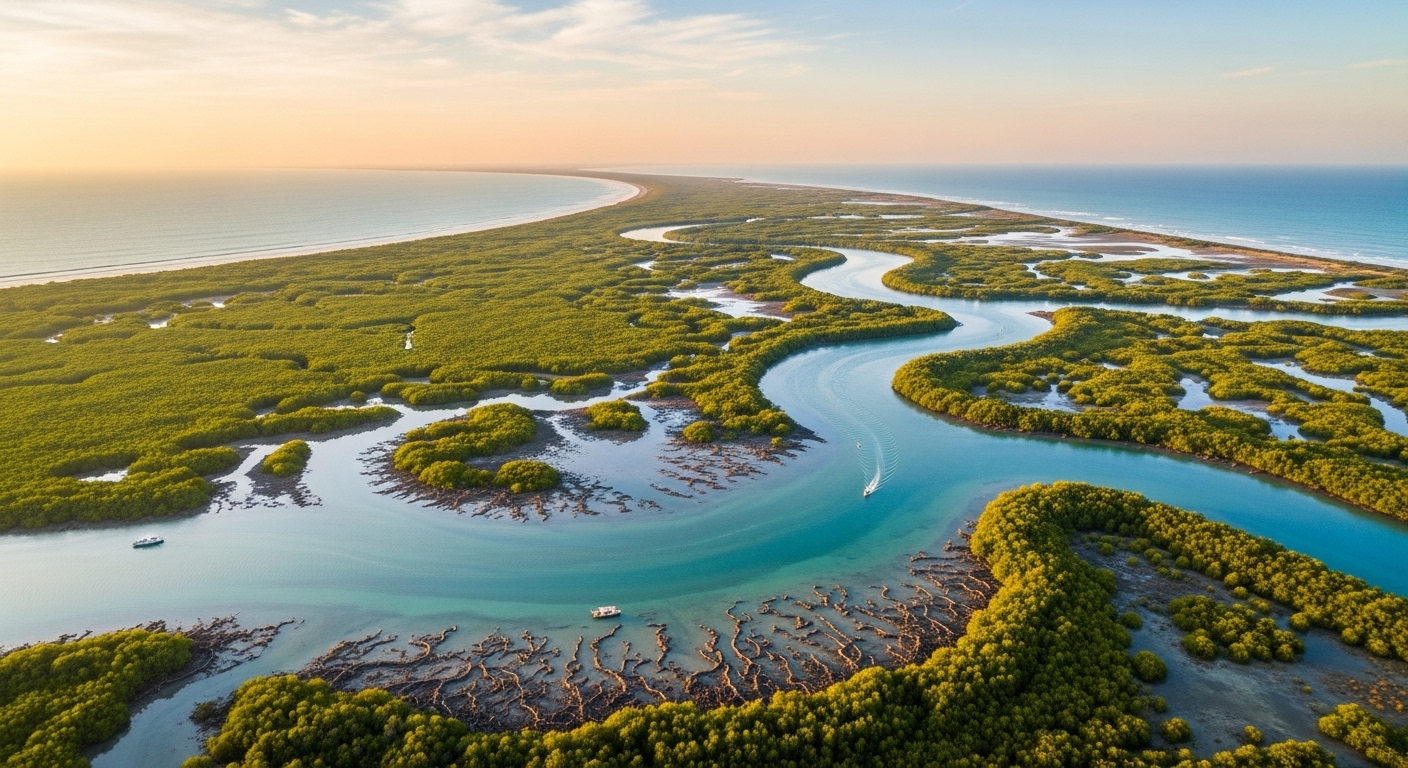

The Mangroves of Abu Dhabi: A Coastal Ecosystem of Vital Importance
Introduction
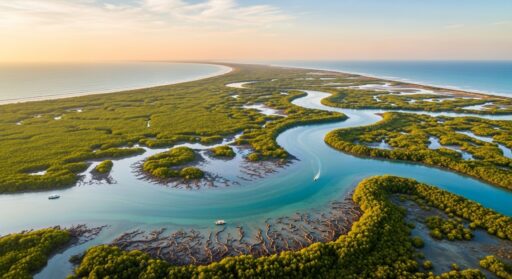
Along the sheltered coastline of Abu Dhabi, between the desert and the sea, lies a unique and vital ecosystem: the mangrove forest. These salt-tolerant trees, primarily the grey mangrove (Avicennia marina), have adapted to thrive in the intertidal zone, creating a tangled, green network of roots and branches that seems to float on the water. Far from being mere coastal scenery, the mangroves are a powerhouse of ecological services, a bastion of biodiversity, and a frontline defender in the battle against climate change, making them one of the UAE’s most valuable natural assets.
An Ecosystem Engineered for Salinity
Mangroves are marvels of adaptation. They survive in waterlogged, saline soils that would kill most other plants. Their complex root systems, which are often exposed at low tide, not only anchor the trees in the soft sediment but also act as snorkels, absorbing oxygen for the plant. To cope with salt, mangroves have special root filters that exclude most of the salt, and those that do get through are excreted through special glands on their leaves. This ability to engineer their own environment allows them to create and dominate a whole new habitat.
A Nursery for Marine Life
The most critical role of the mangrove forest is as a nursery and breeding ground for marine life. The dense, submerged root systems provide a safe, complex habitat for juvenile fish, crabs, shrimp, and mollusks, protecting them from larger predators. Many of the fish species that are commercially important in the Arabian Gulf, including several types of sea bream and snapper, spend their early life stages among the mangrove roots. The falling leaves and detritus from the trees also form the base of a rich food web, supporting the entire coastal ecosystem.
The “Blue Carbon” Sink: Combating Climate Change
Mangroves are now recognized as superstars in the fight against climate change due to their role as “blue carbon” sinks. They are incredibly efficient at absorbing and storing carbon dioxide from the atmosphere, sequestering it in their biomass and, more importantly, in the oxygen-poor mud where their roots grow. Per unit area, mangroves can store up to four times more carbon than terrestrial tropical forests. By protecting and expanding its mangroves, the UAE is not only preserving biodiversity but also making a significant contribution to global carbon sequestration efforts.
Coastal Defense and the Sheikh Zayed Legacy
The mangroves serve as a natural coastal defense system. Their dense root networks bind the shoreline sediment, reducing erosion from waves and storms. They act as a buffer, absorbing the impact of storm surges and protecting the inland areas. The late Sheikh Zayed bin Sultan Al Nahyan recognized the value of mangroves long before the term “blue carbon” was coined. He initiated extensive mangrove planting programs, and today, his legacy continues with the “Give a Ghaf” and other initiatives that have expanded Abu Dhabi’s mangrove forests, making the emirate home to about 60% of the mangroves in the Arabian Gulf.
Conclusion: Protecting a Natural Treasure
The mangroves of Abu Dhabi are a symbol of resilience and natural wisdom. They demonstrate that in the delicate balance between land and sea, life finds a way to not just survive, but to thrive and support countless other species. As the UAE continues to develop its coastline, the preservation and expansion of these vital ecosystems is paramount. They are a living link to the nation’s environmental heritage, a key to a sustainable future, and a beautiful, serene reminder of the hidden wonders that lie at the water’s edge.